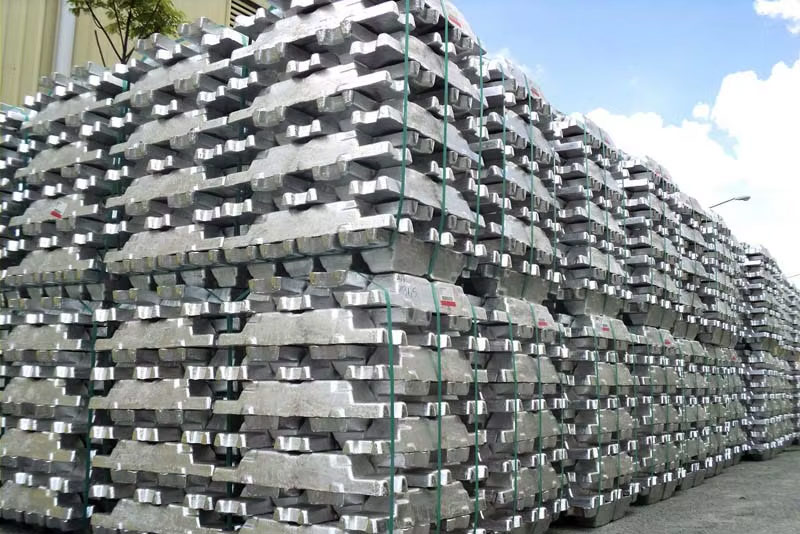


Aluminum ingots are generally classified on the market based on quality, which is determined by the material’s purity and alloy content. One common classification separates ingots into first-grade and second-grade categories. First-grade aluminum ingots possess higher purity and conform to specific standards, making them suitable for industrial applications that demand high performance. Second-grade ingots, on the other hand, typically have lower purity but still meet the requirements for certain applications, offering a more cost-effective alternative.
Examples such as the AA6060 and AA6063 alloys are among the most commonly used types of aluminum ingots. Both are considered first-grade materials, known for being lightweight, durable, and highly machinable. The AA6060 alloy is widely used in construction and the automotive industry, as well as for producing structural profiles. The AA6063 alloy, on the other hand, is favored in architectural applications and decorative products due to its excellent surface finish and strong corrosion resistance.
These alloys contain varying proportions of magnesium and silicon, which enhance the mechanical properties, corrosion resistance, and machinability of aluminum. They are commonly utilized in casting, profile manufacturing, and a variety of metal processing methods. Both AA6060 and AA6063 are premium materials suitable for products that require high performance.